July/August 2026 CEO Letter

Dear colleagues,
Over the past few weeks, I have had a chance to attend several major JA events across the network. In addition, I’ve been observing how governments and corporations are reshaping pathways for entry-level jobs all over the world. In an AI age, when information is readily available, initiative and agency have become priceless, which I believe will have a profound impact on JA’s mission. For that reason, I’m becoming increasingly focused on what JA Worldwide can do to foster initiative and stimulate agency for the young people we serve and for JA teams across the network.
In July, JA Europe hosted Gen-E, which has grown to become the largest annual festival for Europe’s young entrepreneurs. JA Latvia hosted us in Riga and delivered an event that exceeded all expectations. (Check out a recent blog post to learn more.) After Gen-E, I had a chance to visit the US and Canada for several events: Junior Achievement USA’s National Leadership Conference, YMCA’s World Council event (similar to our Global Leadership Conference), and an event for JA Canada alumni hosted by one of our JA Worldwide Governors, Zabeen Hirji.
I found myself reflecting on a common theme across all of these events: That JA is uniquely able to build initiative and stimulate agency in the people we serve. At Gen-E, I observed this through the young entrepreneurs who impressed us all with their stories of building startups. At the JA USA National Leadership Conference, I heard countless stories from leaders and staff from JA areas of accelerating economic mobility for the youth we serve. In Toronto, I met with JA Canada alumni and listened to their reflections on how JA helped them develop confidence, build professional networks, and find their voice as future business leaders. Finally, at the World YMCA event, I met with national and global leaders from the YMCA and heard their impressions of Junior Achievement. I came away with no doubt that JA has a unique role among global non-profit organizations as a leader in fostering initiative and stimulating agency in the youth we serve.
In addition, over the past few weeks, headlines from the United Kingdom have highlighted a major shift in how governments are thinking about the future of work. New investments in apprenticeships and workforce preparation reflect a growing recognition that artificial intelligence is reshaping entry-level jobs and the skills young people will need to thrive. Similar conversations are taking place around the world. Although no one can predict exactly which jobs will exist a decade from now, one thing is becoming increasingly clear: the future will belong not simply to those who know the most, but to those who are willing to take initiative, adapt, and create value in a rapidly changing world.
These developments are consistent with a broader global conversation. This year's World Youth Skills Day, led by the United Nations, focused on youth empowerment through AI and digital skills, recognizing that AI is reshaping education, employment, and entrepreneurship around the world. The conversation is not just about whether AI will influence the future of work; rather, it is about how quickly education systems, employers, and youth-serving organizations can adapt to ensure every young person can thrive.
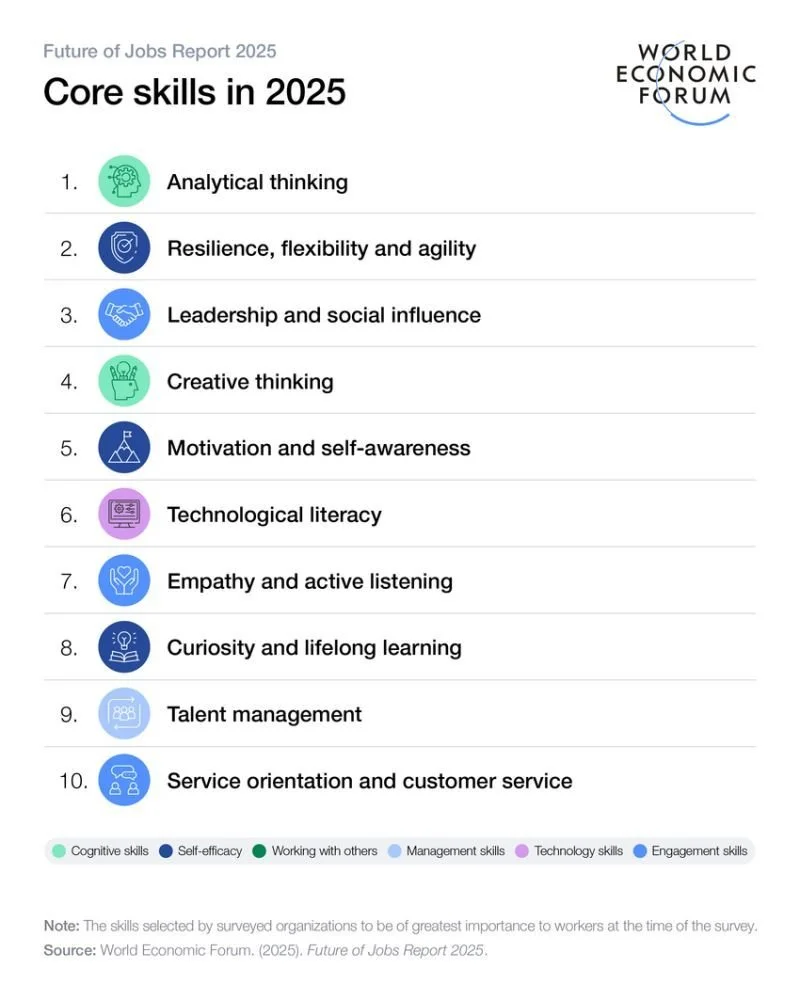
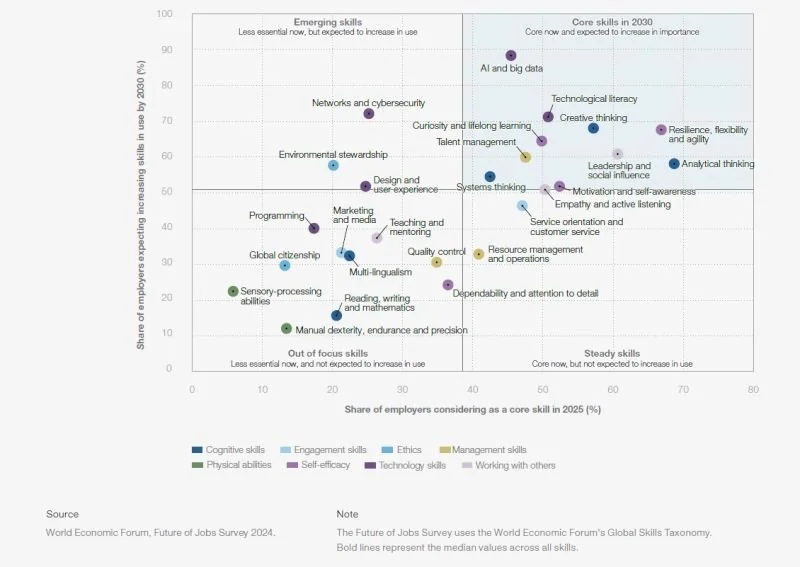
The very concept of an “entry-level job” is changing. For generations, young people expected to spend the first years of their careers learning tasks before gradually taking on greater responsibility. Today, AI is increasingly performing many of those tasks: drafting documents, analyzing data, writing code, and answering questions. As a result, employers are placing an even greater premium on qualities that cannot be automated: curiosity, judgment, collaboration, creativity, resilience, and the ability to solve new problems.
For those of us at JA, this shift should reinforce our mission. Entrepreneurship, adaptability, self-efficacy, AI literacy, critical thinking, and the human skills required to collaborate and lead are becoming just as important as technical expertise. As AI transforms work, these uniquely human capabilities will increasingly distinguish those who create opportunity from those who simply respond to change.
UNICEF researchers have reached a remarkably similar conclusion. Through its emerging Skills for an AI World initiative, UNICEF has found that young people consistently emphasize the importance of transferable skills, responsible AI use, and the ability to adapt as technology evolves. Young people themselves express both optimism about AI's potential and concern about becoming overly dependent on it, reinforcing the importance of education that develops judgment and critical thinking alongside digital fluency.
That is why I believe JA's mission has never been more relevant. For more than a century, we have helped young people develop entrepreneurial mindsets, adaptability, financial capability, ethical leadership, and the confidence to take action. Today, we have the opportunity to help young people become AI-literate citizens who understand both the opportunities and responsibilities that accompany these powerful new technologies as they prepare for careers as future business leaders.
The importance of agency extends beyond our students. It also explains why so many of the world's leading companies continue to invest in JA. Organizations preparing the business leaders of tomorrow recognize that technical skills alone are no longer enough.
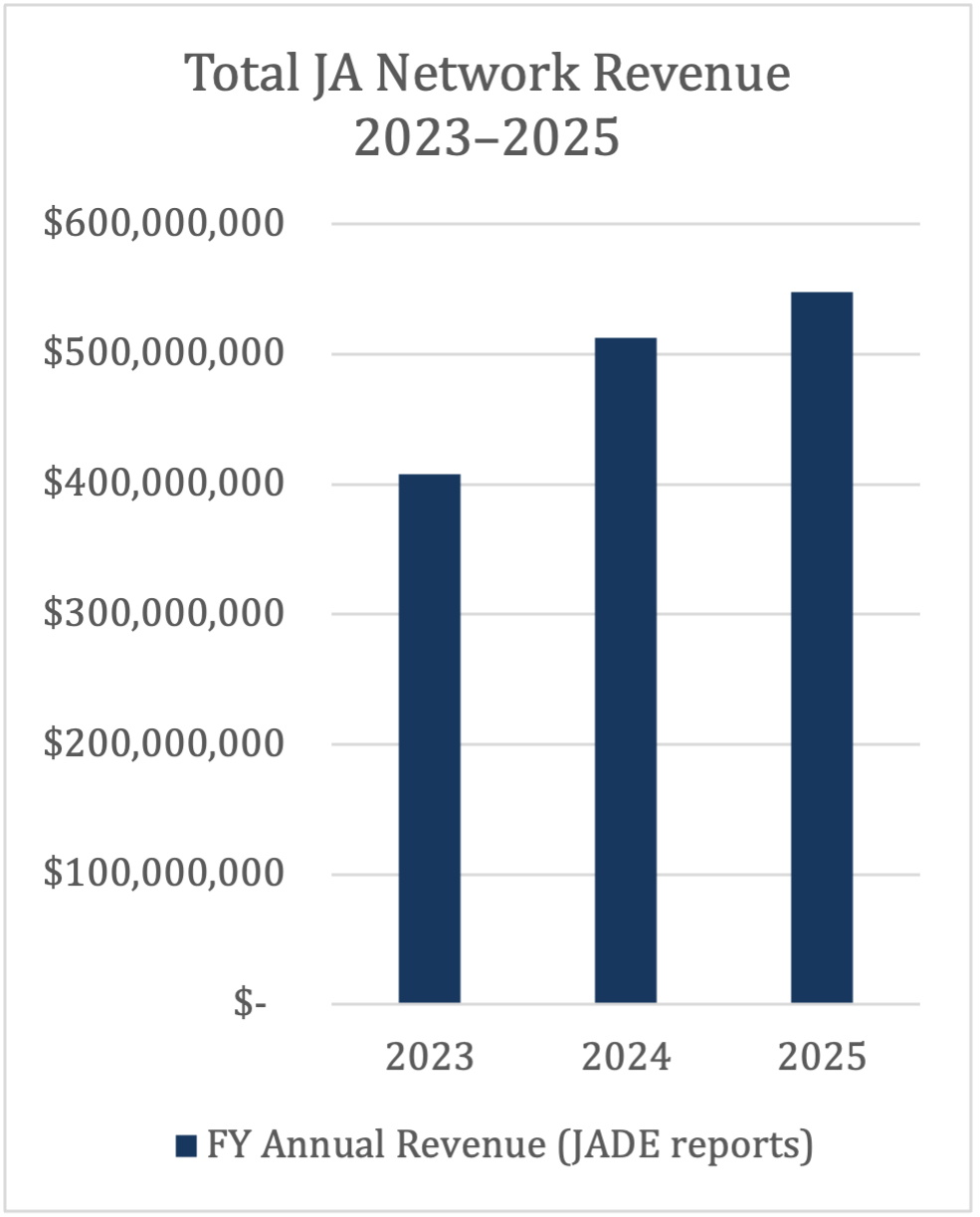
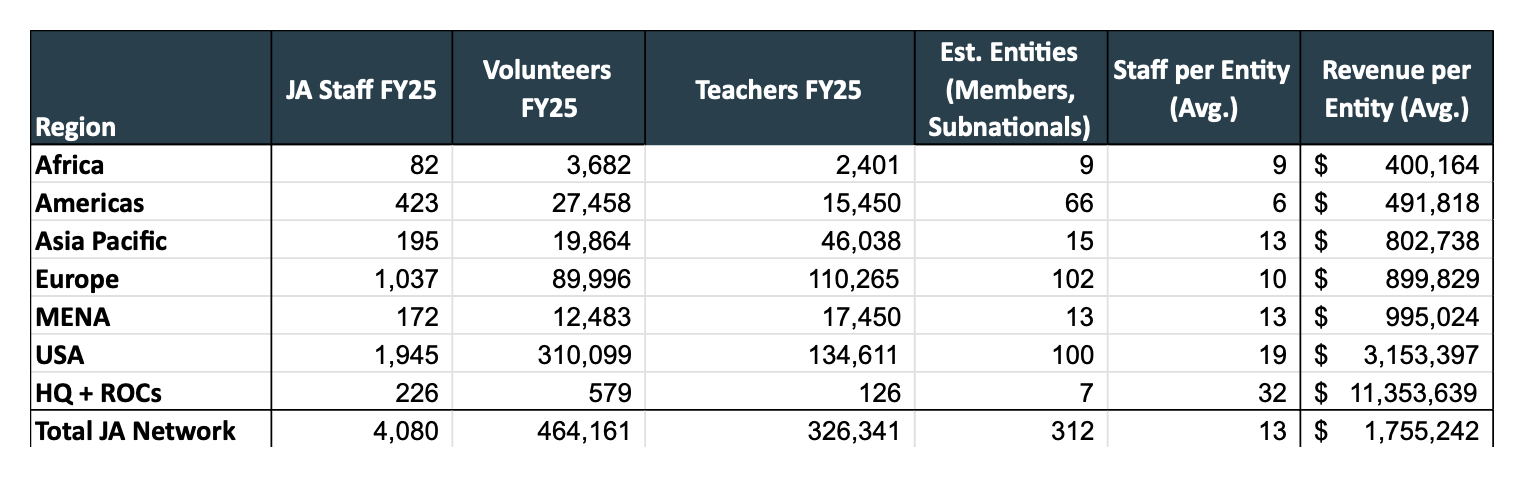
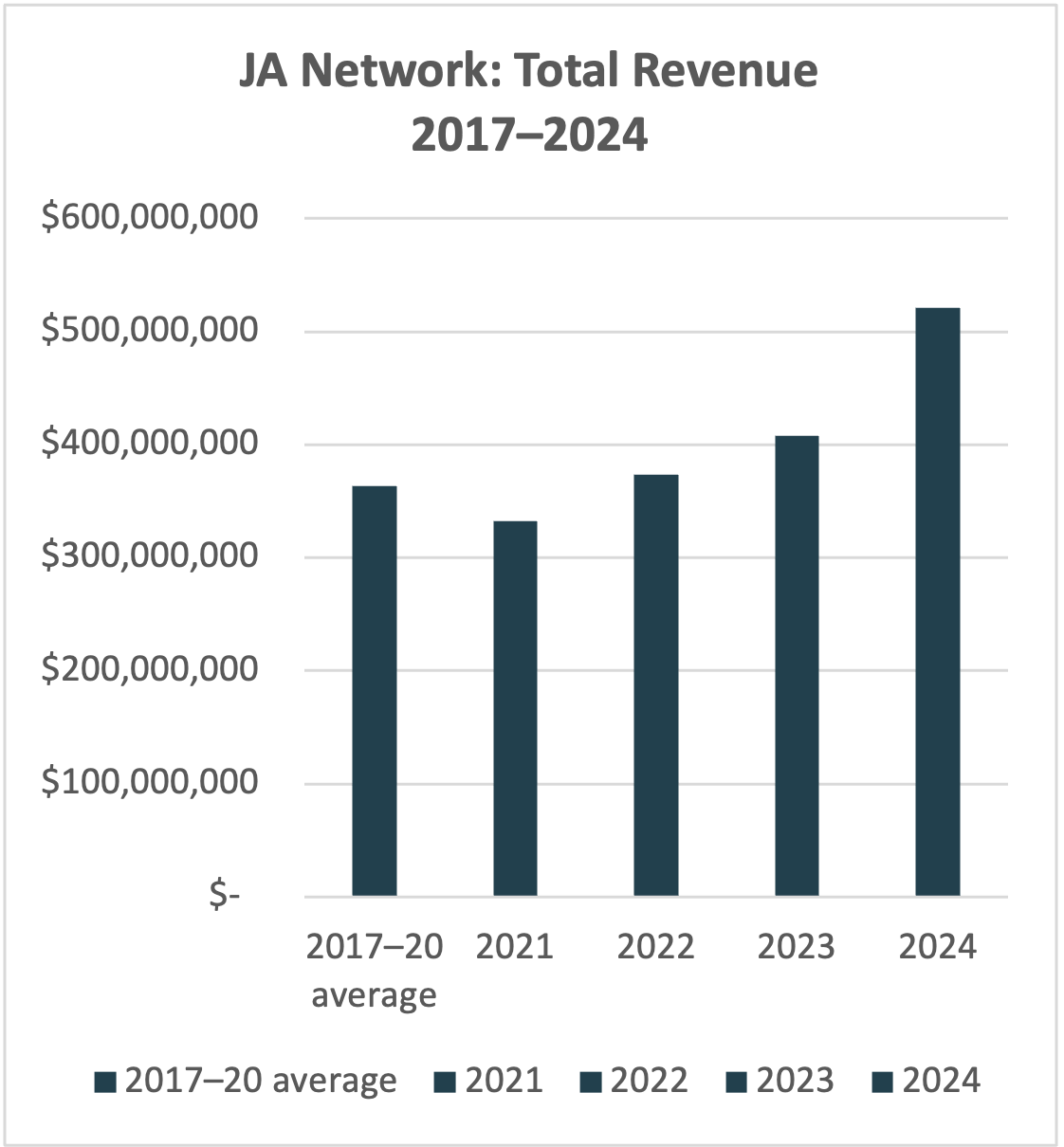
We recently completed our 2025 Major Donor Survey (MDS), and I was reminded that our impact is magnified by our unique position as the non-profit organization with one of the largest number of corporate relationships and business partnerships. Although the survey is not intended to capture all funding received by each JA organization, it offers a valuable view of what our most strategic global relationships are contributing across the network. This year's survey identifies more than US$100 million in support from these strategic relationships, which represents an important subset of the JA network's annual revenue of more than US$550 million. JA's corporate partners include the majority of the world's 100 largest multinational companies (and thousands of local, national, and global business partners), demonstrating the breadth of confidence that leading employers place in preparing the next generation of entrepreneurs, employees, and leaders. Behind those numbers are several encouraging trends:
Many of our strongest corporate partners are investing across multiple JA regions rather than limiting their support to a single country, demonstrating increasing confidence in the value of the global network and the desire to reach youth everywhere rather than just in one location.
A growing number of multinational companies are creating impact simultaneously at the local, national, regional, and global levels recognizing that centralization and decentralization of relationship management are not at odds but can coexist in complex global organizations.
The breadth of support across dozens of JA locations illustrates one of our greatest strengths: relationships built in one part of the world increasingly create opportunities in another.
As AI transforms industries, our network has an opportunity—and a responsibility—to lead. We should certainly embrace new technologies to improve learning and expand our reach. But we should never lose sight of what distinguishes JA. Our greatest contribution is not teaching students how to use artificial intelligence. It is helping them become the kind of people who will use it wisely, ethically, creatively, and with the confidence to improve the lives of others.
The future will undoubtedly bring new technologies, new business models, and new challenges. Yet I remain optimistic because I have seen what happens when young people discover their own potential. Every day, somewhere in the JA network, a student starts a business, learns about investing, solves a problem, and discovers a career they never imagined possible. Those moments remind us that our work has never been about predicting the future. It has always been about fostering agency for young people to shape it. Thank you for everything you do to help the next generation move from uncertainty to opportunity, and from information to initiative.
Until next time,
Asheesh